
Blacksmith Master Workers Guide: Hiring, Wages and Levels
Hiring pool maths, every wage formula, XP thresholds to level 8 and the skill priorities for each of the five Blacksmith Master worker classes.
Workers are the only compounding investment in Blacksmith Master. A blueprints costs once; a worker costs every day and produces every day. Get the payroll right and the shop scales. Get it wrong and you are paying eight people to walk around a room.
The trait picks→ matter more than raw levels after day 30.
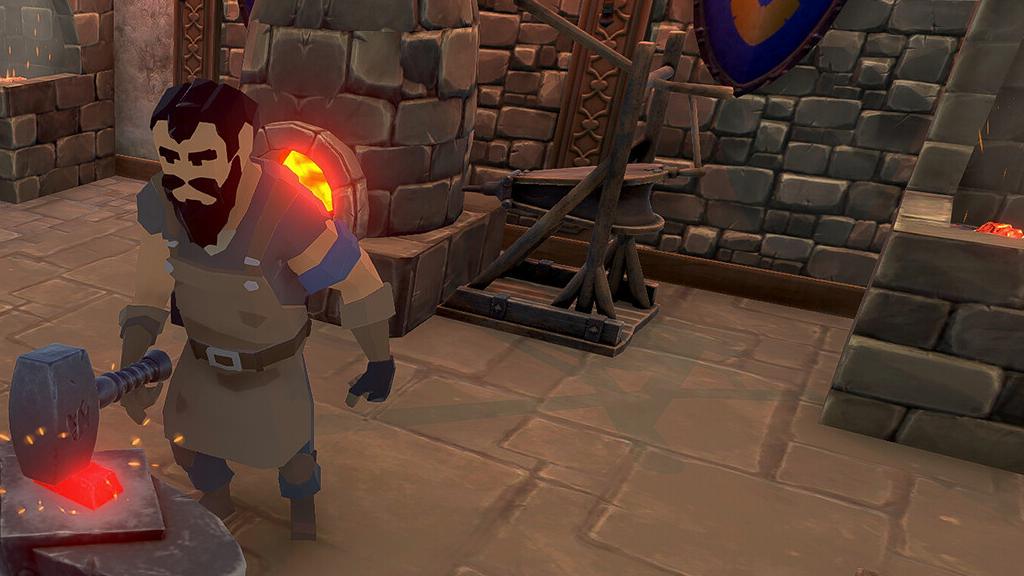
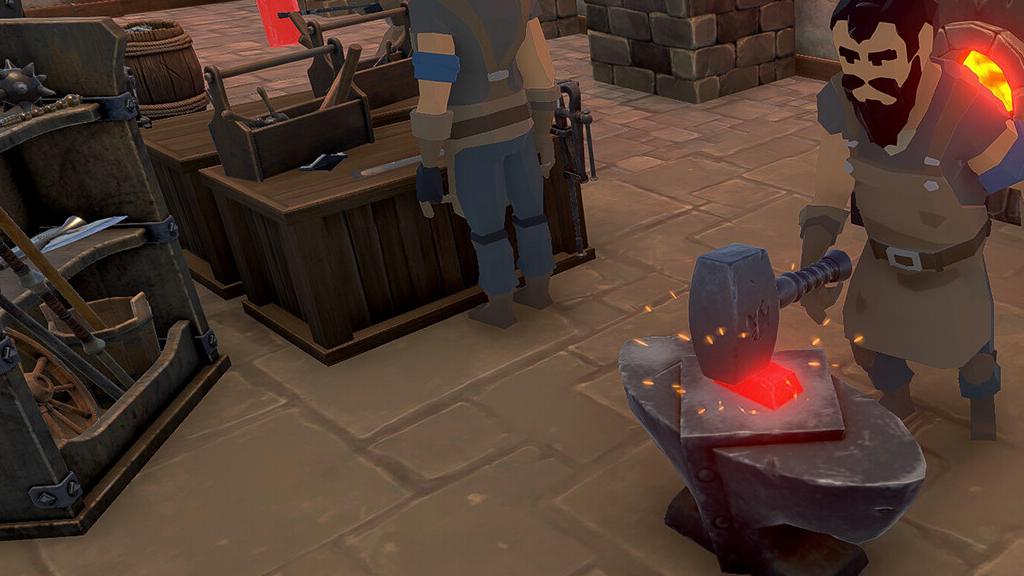
No worker is worth hiring at the minimum fee unless they have a positive trait you need. Wages are forever; traits are forever too.
The five classes
| Class | Base wage | Per level | Job |
|---|---|---|---|
| Blacksmith | 60 | +12 | Crafts at the anvil, furnace, workbench |
| Assistant | 47 | +11 | Hauls, restocks, smelts |
| Cashier | 24 | +12 | Runs the checkout, raises prices |
| Lumberjack | 34 | +9 | Forests and wood |
| Miner | 32 | +10 | Mines and ore |
A level 5 blacksmith costs 120 gold per day. A level 5 cashier costs 84. That gap matters: the cashier is the cheapest worker in the game and one of the most profitable, because Charisma adds customers and Communication adds a percentage to every sale.
The blacksmith master elite workers→ page goes deeper on the exact numbers and edge cases.
Hiring costs
- Three candidates per day.
- Refresh starts at 25 gold and doubles each time, capped at 400.
- Minimum hire fee is 150 gold.
The doubling means two refreshes cost 75 gold and three cost 175. Refreshing more than twice in a day is almost always a mistake, because the hiring fee itself is the real cost.
Hiring Discount nodes (150 / 350 / 500 points) reduce the fee, not the wage. They are worth it only when you are hiring constantly.
XP and levels
| Level | XP required |
|---|---|
| 1 | 0 |
| 2 | 800 |
| 3 | 1,300 |
| 4 | 1,900 |
| 5 | 2,500 |
| 6 | 3,200 |
| 7 | 3,600 |
| 8 | 4,000 |
Each level grants 2 skill points. A level 8 worker has 14 points, which is enough to max two skills and start a third.
The XP curve is steepest between levels 3 and 5, and that is exactly where most workers stall, because the tasks that level fastest (sawing, hauling, designing) are not the tasks that earn money. Rotate workers deliberately rather than letting them grind one job forever.
Skill priorities by class
Blacksmith: Metalworking first if you smelt or work steel; Carpentry first if the shop sells wooden goods; Design only if blueprints are the bottleneck. A blacksmith with split points is a blacksmith who is mediocre at everything.
Assistant: Walk Speed, then Bag Size. Speed determines trips per day and bag size determines items per trip; together they are the assistant's entire throughput. Craft ingots is a task, not a skill, and it levels fast.
Cashier: Charisma before Communication before Efficiency. More customers beats a slightly higher price, and queue time only matters when the shop is packed.
Lumberjack: Axe, then Stamina, then Saw. Every axe level removes a swing from every tree.
Miner: Mining, then Stamina, then Walk Speed. Silver mining without Mining levels is a waste of a worker.
Traits
Every worker has one positive and one negative trait. Positive examples: 10% lower wage, 20% faster movement, 20% more XP, 1% more customers, 20% more design points, 20% faster carpentry, 20% faster anvil work, 20% faster heating, +25% pickaxe damage, +2 bag size.
Negative examples: 50% slower on stairs, 30% longer rests, -10 stamina, 20% slower movement, -2 axe swings, lower wage efficiency.
A worker with +20% movement and -10 stamina is worth keeping. A worker with +2 bag size and 50% slower stairs is not, unless the shop is single-floor.
Staff bench and capacity
A Staff Bench (50 gold, 6x2) seats three workers. You need enough benches before you can hire, and a bench cannot be sold while a worker depends on it. Plan bench placement with the hiring nodes: Hiring 1 (45), 4th Hiring (80), Hiring 2 (250), Hiring 3 (150) each add a slot, so a fully built shop runs several benches across more than one floor.
When to stop hiring
Hire when a bottleneck is human, not when gold is available. The four bottlenecks in order are: anvil time, material supply, counter throughput, and hauling. Each has a worker answer, and hiring the wrong one produces the classic mid-game shop with six employees and no income.
A useful test: if ending the day requires waiting for one specific worker, hire a second one for that job. If it requires waiting for materials, hire a miner or buy a mine, not another smith.
Wages and the daily ledger
At six workers averaging level 4, the payroll is roughly 450 gold per day. That is the number every other decision is measured against: a rack of steel swords sells for 1,500 to 2,000, an order pays 300 to 800, and a bad day with empty racks loses money.
This is why the mid-game feels sudden. The payroll crosses the daily order income somewhere around day 25, and from that point the shop has to sell from racks, not just fulfil contracts.
Official source: Hooded Horse wiki: Workers ↗ — classes, wages, XP thresholds, traits. Official source: Hooded Horse wiki: Mastery Tree ↗ — hiring and discount nodes. Official source: Hooded Horse wiki: Shop ↗ — staff bench.
FAQ
How many workers can I hire? Each hiring node adds one slot, and 1.0 adds master workers on top.
Do wages rise automatically? Yes, with level. Base wage plus a per-level multiplier.
Should I fire bad workers? Yes, if their negative trait hurts the job they do. A bad lumberjack is a permanent tax.