
Blacksmith Master Review: A Supply Chain Game in a Forge
Blacksmith Master review after the 1.0 launch: what the crafting chain does better than its rivals, where the UI fights you, and who should skip it.
Blacksmith Master looks like a crafting game. It is a supply chain game wearing an apron. The anvil is the least interesting part of it, and that is a compliment: the interesting part is the twelve-step argument between an ore vein and a customer's purse.
The Tavern Master comparison→ covers the alternative most people are weighing.
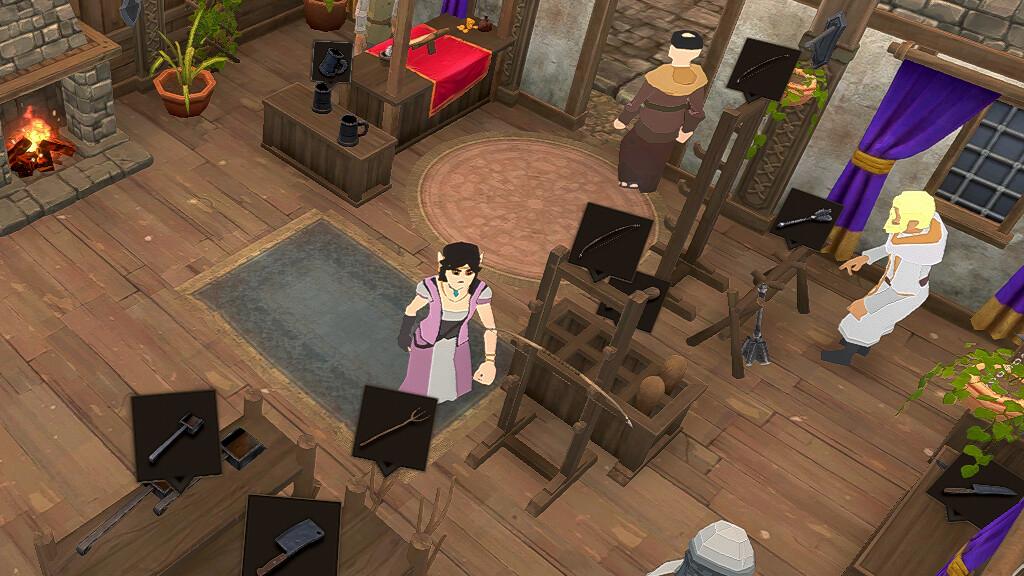
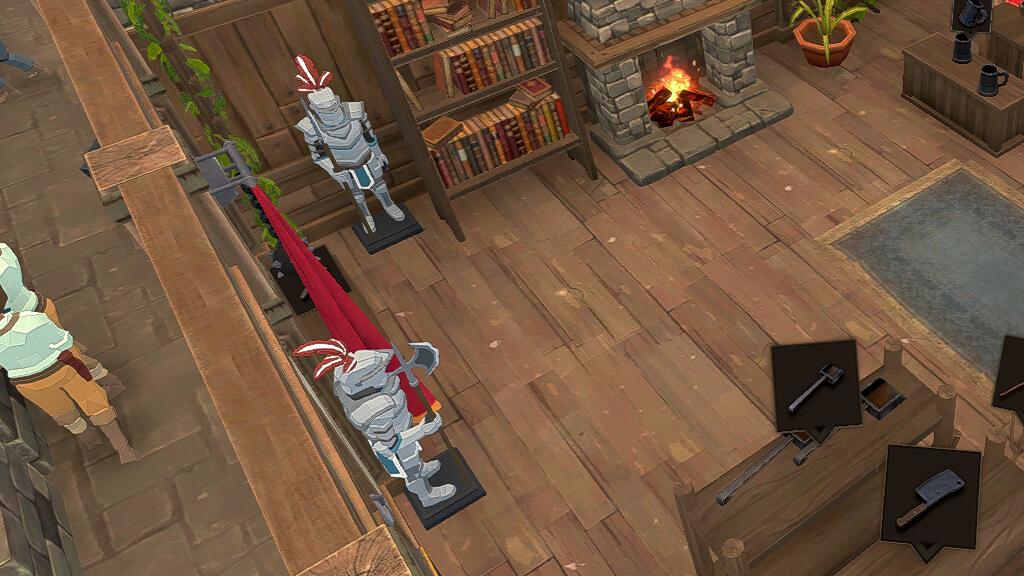
If you liked the production chains in Tavern Master but wanted them deeper, this is the game. If you want combat, look elsewhere.
What it does well
The chain has real depth. Ore to ingot to steel to large steel, wood to planks to furniture, clay to pottery, gems to jewellery. Each step has its own building, worker class and storage type. By day 40 the shop is a machine you designed, and the improvement is visible in the day-end numbers.
The blacksmith master guide→ page goes deeper on the exact numbers and edge cases.
Workers are characters, not stats. One positive and one negative trait per hire means every employee is a small negotiation. A fast smith who cannot climb stairs is a different hire in a five-floor shop than in a one-floor shop. That is a good design decision, and it survives dozens of hours.
The 1.0 additions are substantial. Six master workers with system unlocks, five siege machines with a hundred-plus parts, twelve three-piece item sets, random events and an explicit rarity ladder. This is not a content-thin launch.
Price-to-hours is strong. At the base price of $19.99 — and it launched at 50% off — the game asks for less than most management sims, and the 1.0 progression curve, from first anvil to a five-floor shop with trade routes, is long enough that the price is not the reason to skip it.
What it does badly
The UI is dense and small. Storage panels, blueprint lists and worker screens all assume a 1080p monitor and a patient reader. Adjustable text size helps; it does not fix the information architecture.
The early game is slow in a specific way. Days 1 to 5 are three workers, one anvil and a lot of waiting. The game does not tell you that the first meaningful decision is Construction at 20 points, so new players spend those points on things that do not unlock anything.
Pathing still needs babysitting. The 1.0 update replaced 45-degree movement with free-angle pathfinding, which is a large improvement, but a badly placed rack can still trap customers in a corner. You will rebuild a room at least once.
No combat, no dungeon, no adventure. The forge fantasy implies swords and quests; the game delivers orders and ledgers. That is a design choice, not a flaw, but it is the most common reason people bounce off.
The early access question
The game spent roughly two years in early access before the 1.0 release on November 19, 2026. Saves from early access carry into 1.0, and the systems that changed most — workers, item rarity, siege content — were expanded rather than replaced.
That matters for buyers reading old reviews: a 2024 review is describing a smaller game with fewer worker classes and no master workers. The current build is meaningfully different, and most of the difference is in the middle and late game where the old version was thinnest.
Who should buy it
- Fans of production chains who want a smaller-scale Factorio with a medieval skin.
- Players who liked Tavern Master and wanted the crafting side to matter more.
- Anyone who enjoys optimizing a room layout for an hour and then watching it run.
- Steam Deck owners who do not mind a trackpad for building.
Who should skip it
- Players who want combat, exploration or narrative.
- Players who need a clean, console-grade UI.
- Players who bounce off slow first hours; the first week is the weakest part.
Verdict
At 2,618 Steam reviews and a 50% launch discount, Blacksmith Master is an easy recommendation for the management-sim audience and a coin flip for everyone else. It is not a polished AAA shop sim; it is a systems game with a forge theme, and the systems hold up.
The 1.0 release is the right time to start. The content is there, the saves are compatible, and the early access reviews no longer describe the game you would be buying.
Score, for people who want one
8/10 for management sim fans. 6/10 for everyone else. The gap is the whole review: this is a game that rewards the specific pleasure of watching a badly designed room get fixed.
Official source: Blacksmith Master on Steam ↗ — price, reviews, release date. Official source: Hooded Horse: Blacksmith Master ↗ — official feature list. Official source: Blacksmith Master 1.0 notes ↗ — what changed at launch.
FAQ
Is Blacksmith Master worth it? For management sim fans, yes — especially at the launch discount. For action fans, no.
Is it better than Tavern Master? Deeper, slower and less charming. Which is better depends on whether you want supply chains or a busy room.
Is it finished? Yes. 1.0 released November 19, 2026, after roughly two years of early access.