
Blacksmith Master Guide: 1.0 Roadmap From Day 1 to 5 Floors
A phase-by-phase Blacksmith Master 1.0 roadmap: what to build, which mastery nodes to buy first, and the gold targets that keep orders flowing.
Blacksmith Master left Early Access on 19 November 2026, and the 1.0 build changed enough of the economy that most 2024-2025 advice now sends you down the wrong branch of the mastery tree. This roadmap is written from the released build (App ID 2292800) and the official wiki's cost tables, in the order a fresh shop runs into each wall. If you have never touched the game, read the beginner guide → first and come back when day 10 arrives.
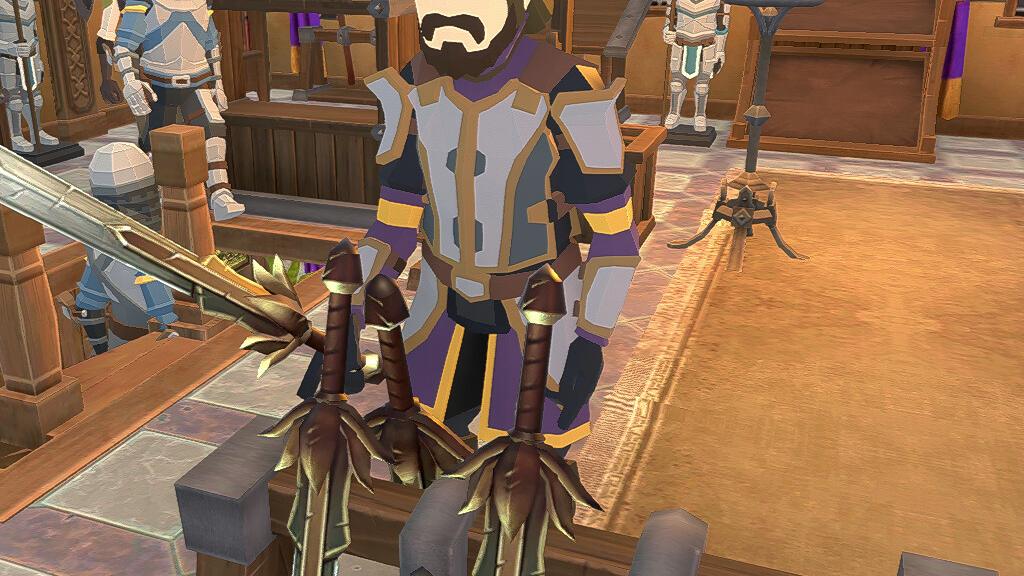
Spend your first 150 mastery points on Carpentry, Staff, Hiring 1, Blueprint Upgrades and Assistants. Everything else can wait until the shop has a Store and a steady ingot supply.
Phase 1: days 1-10, prove the loop works
You start with a furnace, an anvil, a water bucket and seven blueprints. The opening does not reward expansion; it rewards finishing orders on time so the merchant counter never sits empty.
| Days | What to buy | Why it pays |
|---|---|---|
| 1-3 | Nothing. Craft iron orders, sell spare stock | You need roughly 650 gold before the first meaningful purchase |
| 3-5 | Second blacksmith (150 gold minimum hire) | Two crafts per day cycle roughly doubles order throughput |
| 5-7 | Staff Bench, 50 gold, 6x2 | Seats three workers; without it you cannot hire past your bench count |
| 7-10 | Furnace upgrade or second anvil | The furnace is the bottleneck once two smiths share one heat source |
The daily loop is fixed: merchants give five offers per day into three slots, a refresh costs 200 gold, and every twentieth completed order hands you an elite worker for free. Do not refresh offers in the first week. Two hundred gold is two-thirds of a blacksmith's hiring fee, and the free elite at order 20 is worth more than any single reroll.
From day 8, offers can carry a 24-hour timer: +10% gold if you deliver in time, -20% if you miss. Check the timer before accepting anything that needs an ingot you do not have in storage.
Phase 2: days 10-30, buy the production floor
This is where the mastery tree stops being flavour and starts being a budget. Points come from crafting quality, so a shop that keeps making common-quality tankards will stall around 100 points no matter how many days pass. Push quality on a few blueprints instead of spreading upgrades thin.
The first five nodes worth their cost:
- Carpentry (1 point) unlocks the Carpentry Table, 300 gold, and wooden blueprints that need no ingots at all. Wooden Scoop and Wooden Club are weak sellers, but they keep smiths busy when ore runs dry.
- Staff (2 points) is the cheapest capacity increase in the game.
- Hiring 1 (45 points) raises the hire pool level, which is how you stop seeing level-1 blacksmiths forever.
- Blueprint Upgrades (50 points) opens quality steps on existing blueprints, the single biggest price multiplier available this early.
- Assistants (60 points) unlocks the Item Chest and the assistant role, which is the difference between a smith fetching ingots and a smith forging.
A blacksmith at level 1 costs 72 gold per day (60 base + 12 per level). Three of them plus an assistant is around 260 gold daily before any ore purchase, so your order income has to clear that line every day. If it does not, cut a worker rather than skipping the day.
Phase 3: days 30-70, open the Store
Store costs 125 points and changes what the shop is. Instead of only filling merchant orders, you place racks, assign blueprints, put a cashier behind a Checkout Counter, and let walk-in customers buy finished goods.
| Store piece | Cost | Footprint | Note |
|---|---|---|---|
| Checkout Counter | 150 | 6x6 | One cashier; cannot be sold while staffed |
| Weapon Rack | 100 | 4x2 | One customer, six blueprints |
| Shelves | 200 | 4x2 | Two customers, triple capacity |
| Item Chest | 300 | 4x6 | Unlimited blueprint storage; needs Assistants |
The decoration rule is easy to miss: each display needs 500 gold of lights or decorations before it pulls its maximum customer count. Two Plants at 75 and a Candle at 100 do not get you there. Budget 500 per rack when you plan the room, or the racks will look busy while the queue stays empty.
A shop with six displays therefore wants 3,000 gold of decoration on top of the racks themselves. That number is why the money guide → exists.
Phase 4: days 70+, vertical growth and the 1.0 tail
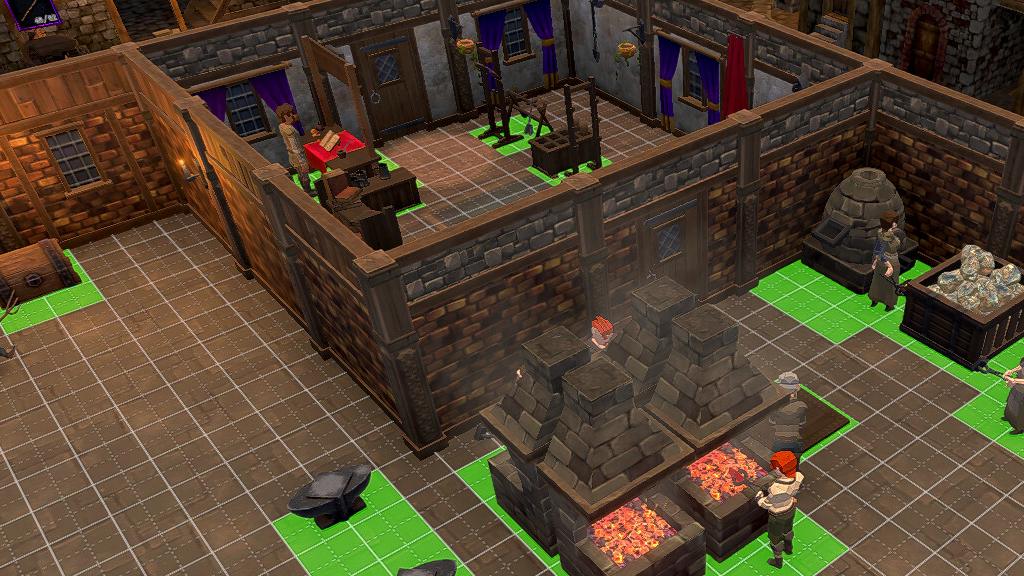
Once the ground floor is full, the tree offers 2nd Floor at 100 points, 3rd at 600, 4th at 700, 5th at 800, and Basement at 300. Stairs cost 100 and eat 6x10, spiral stairs eat 8x4, so plan the landing before you buy the node.
The 1.0 additions sit at the far end: Master Workers, siege machine orders, twelve item sets with three pieces each, and random events that can cut customer traffic or hiring costs for a day. Master Scholar unlocks the fifth blueprint upgrade, which is where the silver and gold jewellery lines finally justify their material cost. None of it is reachable in the first month, and none of it is required to have a profitable shop.
What "done" looks like
A stable shop at day 100 has four to six blacksmiths, one assistant per two smiths, a Store with at least four displays at full decoration, an iron mine running, and a smelting chain that turns ore into steel without you buying ingots. Daily wage bill sits between 500 and 800 gold; order income plus walk-in sales should clear 1,200. If your numbers are far off those, the problem is usually layout or mastery order, not difficulty.
Official source: Blacksmith Master on Steam ↗ — release date, platforms and 1.0 announcement. Official source: Hooded Horse community wiki ↗ — mastery costs, building prices, worker wages. Official source: 1.0 Preview announcement ↗ — Master Workers, siege machines, item tiers and save compatibility.
FAQ
How long is Blacksmith Master? There is no ending. A first profitable shop takes roughly 20-30 in-game days; filling five floors and finishing the mastery tree is a 100+ day project.
Should I restart for 1.0? No. The developer confirmed Early Access saves load in 1.0, and the mastery tree is unchanged in structure, only extended.
Is there a difficulty setting? Yes, adjustable difficulty is listed on the store page, and random events in 1.0 can temporarily change customer counts and hiring costs regardless of the setting.