
Blacksmith Master Trade Routes: Costs, Ratios and Unlocks
All four Blacksmith Master trade routes with every tier's cost and exchange ratio, what each one supplies, and which route to unlock first.
Trade Routes cost 700 mastery points and unlock four routes, each with four tiers. They are the only way to get clay, birch, gold ore and gems without the corresponding gathering zone, and the only repeatable sink for finished goods that would otherwise sit on a rack.
The ingot tiers→ determine what the tier 2 and tier 3 routes are really worth.
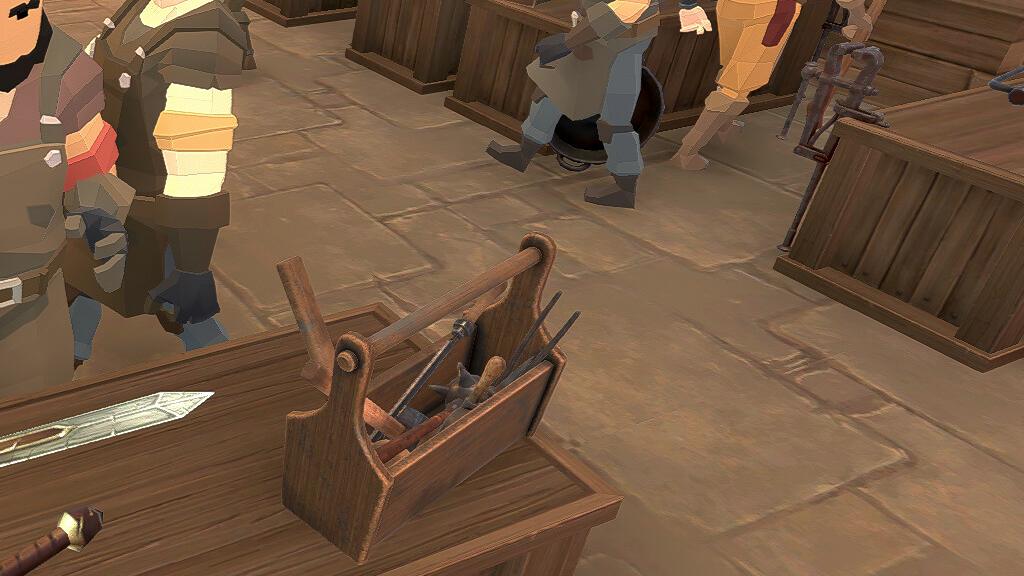
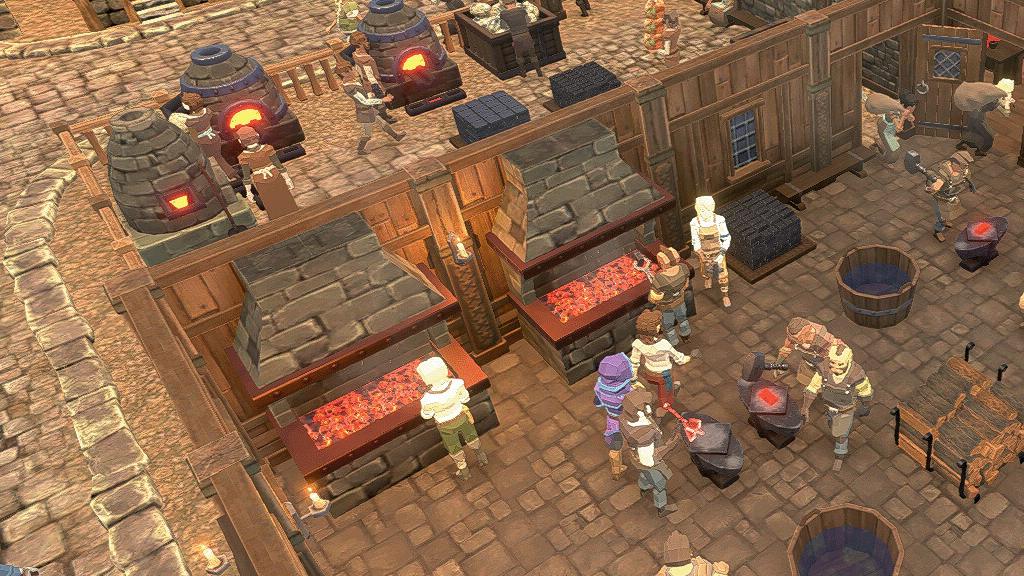
A route only produces automatically if you own the blueprints it consumes and have an Item Chest. Without the chest, the route stalls.
How routes work
- Unlock Trade Routes (700 points).
- Buy a Trade Route Crate (300 gold, 4x6).
- Select a route and a tier.
- The route consumes the listed goods and delivers the output to your stock the next morning.
- Requirements: the blueprints for every input, and an Item Chest so production can restock.
The one-day delay is the same as gathering. Routes are not a rescue for a shortage today; they are a supply line for tomorrow.
The blacksmith master ingots→ page goes deeper on the exact numbers and edge cases.
Clay Pit
| Tier | Cost | Input | Output |
|---|---|---|---|
| 1 | 10,000 | 30 Wide Cooking Pan | 20 Clay |
| 2 | 20,000 | 60 Wide Cooking Pan | 40 Clay |
| 3 | 50,000 | 90 Wide Cooking Pan | 80 Clay |
| 4 | 100,000 | 120 Wide Cooking Pan | 80 Clay |
Clay feeds pottery, and pottery is a 600-point node. The Clay Pit is therefore the route for a shop that has committed to pottery, not a general-purpose route. Tier 4 is worse per input than tier 3, which is a pattern worth noticing: the final tier is usually a scale upgrade, not an efficiency upgrade.
Birch Woods
| Tier | Cost | Input | Output |
|---|---|---|---|
| 1 | 40,000 | 15 Metal Pitchfork + 15 Battleaxe + 15 Black Amphora | 20 Birch Wood |
| 2 | 100,000 | 30 + 30 + 30 | 60 Birch Wood |
| 3 | 150,000 | 45 + 45 + 45 | 120 Birch Wood |
| 4 | 200,000 | 60 + 60 + 60 | 160 Birch Wood |
Birch is the late-game carpentry material, and this route is the only source. It is also the most expensive input basket: three different blueprints, all metal, all mid-tier.
Gold Mine
| Tier | Cost | Input | Output |
|---|---|---|---|
| 1 | 60,000 | 30 Copper Goblet + 20 Hunter's Bow | 15 Gold Ore |
| 2 | 150,000 | 60 + 40 | 30 Gold Ore |
| 3 | 250,000 | 90 + 60 | 45 Gold Ore |
| 4 | 350,000 | 120 + 80 | 60 Gold Ore |
Gold ore is the jewellery bottleneck. Fifteen ore per day at tier 1 is enough for two or three gold items, which is roughly one rack restock per week. The route pays for itself only if jewellery sells, which requires Jewelry (900) and a gem supply.
Gem Mine
| Tier | Cost | Input | Output |
|---|---|---|---|
| 1 | 100,000 | 30 Pickaxe + 30 Shovel | 6 Topaz |
| 2 | 200,000 | 30 + 30 | 6 Emerald |
| 3 | 300,000 | 30 + 30 | 6 Ruby |
| 4 | 400,000 | 30 + 30 | 6 Diamond |
Six gems per day per tier, and the tiers are sequential: topaz first, then emerald, ruby, diamond. The inputs are cheap tools you can mass-produce, which makes this the most sustainable route in the game.
If the Master Miner is on staff, gems also drop from mining, and the Gem Mine route becomes optional. That is a 1.0 change that devalues a 400,000 gold route, which is worth knowing before you buy it.
Which route first
Gold Mine if jewellery is the plan. Gold is otherwise locked behind a 200-point mine and a slow smelt.
Gem Mine if the shop already sells jewellery and needs gems, or if you want a cheap input basket.
Birch Woods only for a carpentry-heavy shop with all three blueprints. It is the most expensive and the most niche.
Clay Pit last, unless pottery is a core product line.
Route economics in one table
| Route | Daily output | Input value (approx) | Best for |
|---|---|---|---|
| Clay Pit | 20 clay | 30 cooking pans | Pottery |
| Birch Woods | 20 birch | 45 mixed weapons | High-end carpentry |
| Gold Mine | 15 gold ore | 50 mixed goods | Jewellery |
| Gem Mine | 6 gems | 60 tools | Jewellery |
The input values are production cost, not market price, and that is the point: routes convert cheap mass-produced goods into scarce materials at a fixed rate. A shop with spare anvil time and no gold ore should be running the Gold Mine route, because the alternative is not having gold at all.
The route trap
Routes consume goods continuously once set. A shop that sets a tier-4 route without the production capacity to feed it will drain its stock, stall the route, and wonder why the crate is empty.
Set tier 1 first. Watch the input consumption for three days. Upgrade only when the inputs are being replaced faster than they are consumed.
Official source: Hooded Horse wiki: Trade routes ↗ — all tiers, costs and ratios. Official source: Hooded Horse wiki: Mastery Tree ↗ — Trade Routes node. Official source: Hooded Horse wiki: Shop ↗ — trade route crate and item chest.
FAQ
Do trade routes need workers? No. They run automatically with the inputs and an Item Chest.
Can I cancel a route? Yes, by changing the crate's selection; consumed goods are not refunded.
Which route gives gold ore? The Gold Mine route, 15 ore per day at tier 1.