
Blacksmith Master Tips: 15 Rules the Game Never States
Fifteen Blacksmith Master tips that change how you spend gold: restock shortcuts, decoration thresholds, order timing and the 1.0 speed toggle.
Most Blacksmith Master advice repeats the tutorial. The useful tips are the ones buried in menus: the right-click that refills a storage for free, the exact decoration budget per display, the reason a smith ignores a full order queue. All fifteen below were checked against the 1.0 build and the official wiki's numbers.
The start-here guide→ puts these tricks in the order I actually use them.
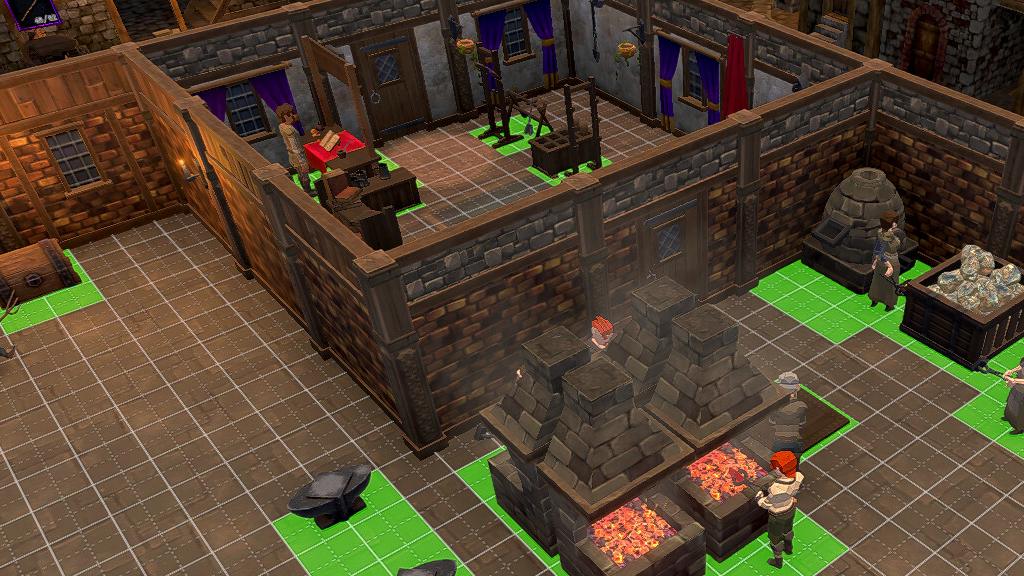
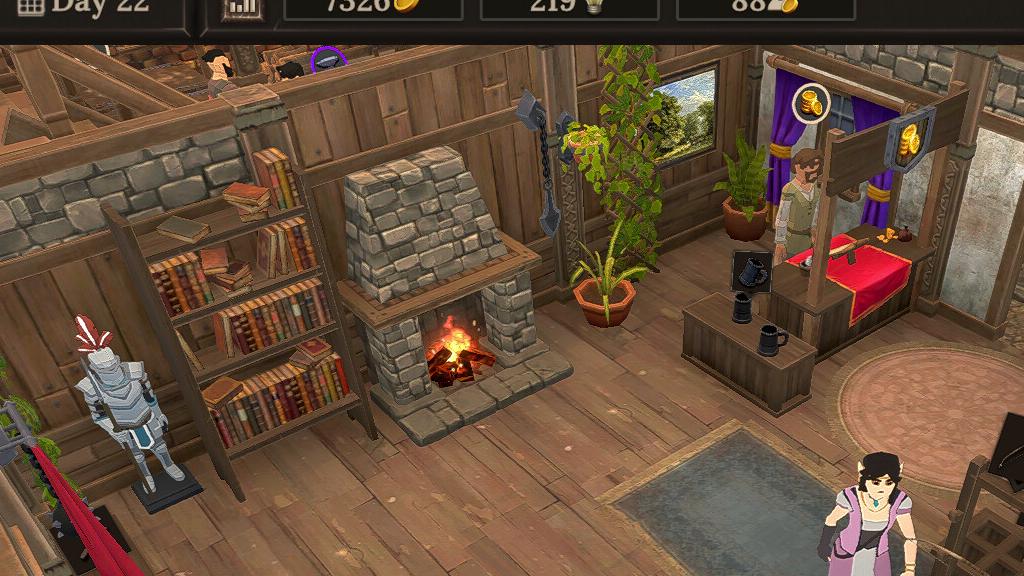
Right-click restock, 500 gold of decoration per display, and never refresh merchant offers before day 15. Those three alone fix most stalled shops.
Money and orders
1. Right-click refills a storage instantly. Select a Storage set to Iron Ingot and right-click it: 30 gold per ingot, no menu, no assistant. Same trick on a Wood Pile set to oak at 15 gold per log.
The blacksmith master guide→ page goes deeper on the exact numbers and edge cases.
2. Refreshing merchant offers doubles in price. The first refresh is 200 gold, and there is no refund if the new board is worse. Five offers per day is usually enough once you have three order slots filled.
3. Every 20th completed order gives an elite worker. The counter resets after the reward, so the practical target is 20 orders per stretch, not 20 per day. Elite Workers Boost (50 points) drops the requirement to 17.
4. Timed orders are a margin decision, not a challenge. From day 8, a timed order pays +10% on delivery and takes -20% on a miss. A missed 400 gold order costs 80 gold, which is more than most blueprints' upgrade cost. Decline when the material is not already in the warehouse.
5. Prices are not fixed. Customer purchase chance rises with quality and falls with price. Marking a display up 15% can beat selling two extra units if your production cannot keep pace.
Layout and furniture
6. Displays need 500 gold of decoration each. Not 500 total. Plants and banners cost 75, chains 200, paintings 500, candles and lamps 100. A six-display shop wants 3,000 gold of decoration before every rack pulls its maximum customer count.
7. Wall and floor skins are free. Only construction and demolition cost gold, and both need the Construction node (20 points). Re-skinning a room costs nothing, so experiment.
8. Placed items sell back at 70%. Racks, tables and stairs all refund most of their price. The exception is a Checkout Counter with a cashier assigned: it cannot be sold until the cashier is unassigned.
9. Footprints are bigger than they look. A Smelter is 8x6, the tier-two version 10x6, tier three 12x6. A shop built for one smelter cannot fit the upgrade without demolishing a wall.
10. Stairs are the hidden floor tax. Regular stairs take 6x10; spiral stairs take 8x4 and cost the same 100 gold. On a narrow plot, spiral stairs are the only way the second floor pays for itself.
Workers
11. Wages scale with level, not with output. A level-8 blacksmith costs 156 gold per day (60 + 12x8) whether they craft a 73 gold knife or a 600 gold katana. High-level workers only make sense on high-value blueprints.
12. Trait pairs are one positive, one negative. A smith with +20% movement and -10% wages is strictly better than one with +20% movement and +50% stair time. Check both lines before hiring, not just the purple text.
13. Assistants need two storages of the same type to transfer ingots. The Transfer Ingots task only appears when at least two ingot storages exist. One storage means your assistant stands around costing 47 gold a day.
14. Smiths can be told what to prefer. Craft for merchants, design, craft for racks, trade routes, each with a preference filter for most expensive, cheapest, most complex, simplest, metal or wood. Setting "most expensive" on a skilled smith is how you stop them wasting steel on tankards.
Time and pacing
15. 1.0 adds a 6x speed. The old maximum was 3x, and the new tier is easy to miss in the top bar. It does not change production rates, only how fast you watch them, which matters on a five-floor shop.
A sixteenth, because it saves saves: customer-only doors arrived in 1.0. Put a staff door at the forge and a customer door at the shop front, and your smiths stop walking through the queue.
Two tips that cost real money if ignored
The Storage restock is convenient and expensive. At 30 gold per iron ingot and 73 gold for a common Kitchen Knife, restocking every order leaves a 43 gold margin before wages. A single iron mine (200 points) removes that cost permanently, which is why the mine nodes beat almost every quality upgrade in the mid game.
The second is decoration spreading. Five racks with 100 gold of decoration each pull one extra customer between them, not five. Concentrate the budget: fully decorate two displays, sell from those, and leave the rest as overflow.
Official source: Hooded Horse wiki: Shop ↗ — decoration thresholds, item prices, footprints. Official source: Hooded Horse wiki: Workers ↗ — wages, traits, task preferences. Official source: Blacksmith Master 1.0 Preview ↗ — 6x speed and customer-only doors.
FAQ
What is the best first purchase? A second blacksmith once order slots stay full, then a Storage. Furniture upgrades before that mostly buy walking time.
Does the 6x speed affect wages? No. Wages are charged per in-game day regardless of speed.
Why is my cashier not selling? Either the rack has no blueprint assigned, the display quality is too low for the price, or the customer cannot reach the Checkout Counter.