
Blacksmith Master Blueprint Quality and Design Points
How design points and blueprint upgrades work in Blacksmith Master, why quality beats quantity, and when the Design Table earns its 200 gold.
A blueprint is not a fixed recipe. It has a quality level, and that level changes what customers will pay and how often they buy. Two shops can sell the same sword on the same day for different prices because one upgraded the blueprint and the other did not.
The item and price index→ lists every blueprint these quality tiers apply to.
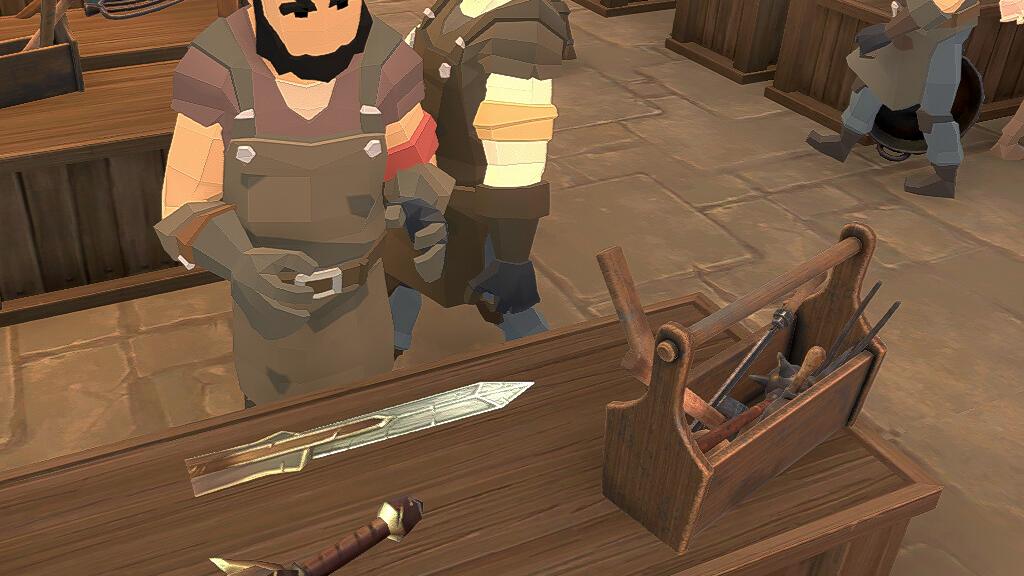
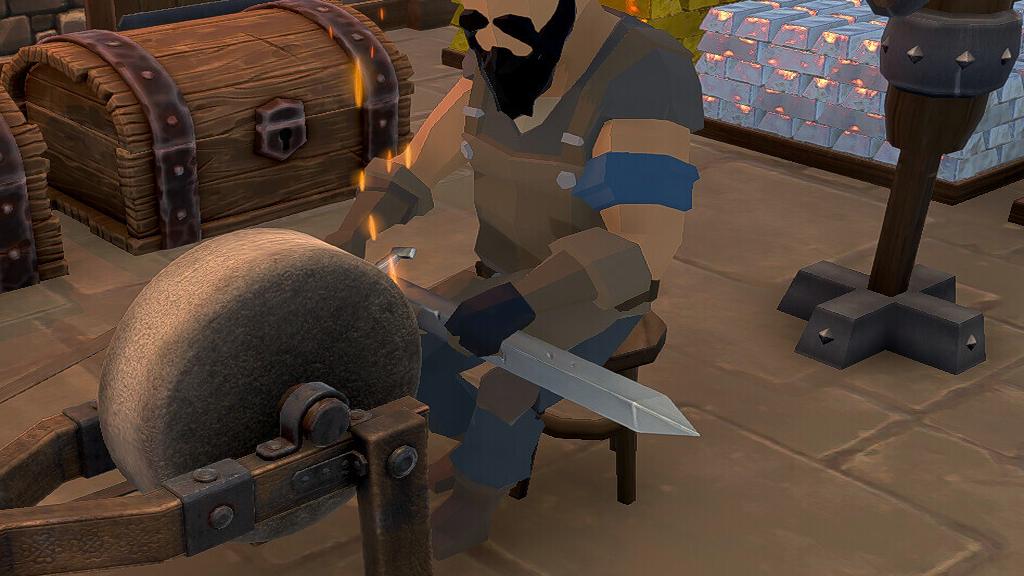
Blueprint Upgrades costs 50 mastery points and is available early. It is the highest-value 50 points in the tree after Carpentry.
Where quality comes from
Three sources, and they stack:
The blacksmith master wiki→ page goes deeper on the exact numbers and edge cases.
- Design points: a smith with the Design task generates points, which are spent to upgrade blueprints.
- Blueprint Upgrades (50 points): raises the quality ceiling overall.
- Master Scholar (1.0): unlocks the fifth upgrade tier, which no amount of points can otherwise reach.
The Design skill itself generates 10 points per day at level 0 and +5 per level. A level 5 designer produces 35 points per day, which is enough to push one blueprint up a tier every few days.
Design points in practice
Design is a task, not a passive: a blacksmith assigned to Design stands at the Design Table and works. That means every point of design time is anvil time not spent, which is the trade-off most players get wrong in both directions.
Early game, design is a luxury. The shop needs swords, not better swords.
Mid game, design is the highest-return task in the shop. A quality tier on a best-selling blueprint raises every future sale of that item forever, for a one-time point cost.
The switch point is roughly when the rack sells out every day. If customers are buying everything you make, quality is the only way to raise revenue without more anvil time.
What quality actually changes
| Effect | Direction |
|---|---|
| Customer purchase chance | Higher quality, higher chance |
| Sale price | Higher quality, higher price |
| Merchant offer value | Higher quality, higher offer |
| Mastery point gain | Higher quality, more points |
That last row is the compounding loop: better quality produces more mastery points, which buys the nodes that produce better quality. A shop that ignores design grows linearly; one that invests grows on a curve.
The exact multipliers are not published, so treat any "quality gives +X%" claim as an estimate. The direction is certain; the size is not.
The Design Table
The Design Table costs 200 gold, takes 6x6, and is where design work happens. At 6x6 it is one of the larger stations, and placing it in the forge room means the designer is adjacent to the anvil, which lets one smith alternate between crafting and designing without a long walk.
A +20% design points trait on a smith is worth more than it looks: it applies to the daily generation, not to a single craft, so it compounds every day the smith designs.
Upgrade order
- The item that sells out first. Quality on a product nobody buys is decorative.
- The highest-price item you can produce. A 10% price increase on a 600 gold sword is 60 gold; on a 60 gold horseshoe it is 6.
- The item merchant orders ask for most. Better quality raises the offer value on every future order.
- Everything else, when points are spare.
Do not spread design points across ten blueprints. Concentrate: three high-quality products outsell twelve average ones because the rack space and the customer attention are both finite.
Quality and the 1.0 item ladder
The 1.0 update introduced an explicit rarity ladder from common to mythic. Rarity interacts with quality: a high-quality blueprint of a high-rarity item is the top of the price curve, and it is what the late-game racks should hold.
This also made the Master Scholar disproportionately valuable. Fifth-tier upgrades are not reachable through mastery points, so a shop without that master worker has a hard ceiling on its best items.
Common mistakes
Designing before the shop sells out. Points spent on quality that customers never see are wasted.
Upgrading cheap items. The percentage is the same, the absolute gain is not.
Ignoring the design task entirely. A shop at day 60 with base-quality blueprints is leaving money on every sale it has ever made.
Assigning the best smith to design permanently. Design is a phase, not a career. Rotate the smith back to the anvil once the target blueprint is upgraded.
Official source: Hooded Horse wiki: Blueprints ↗ — blueprint list, points and upgrades. Official source: Hooded Horse wiki: Workers ↗ — Design skill and daily point generation. Official source: Blacksmith Master 1.0 notes ↗ — rarity ladder and Master Scholar.
FAQ
How do I get design points? Assign a blacksmith to Design at a Design Table. Level 0 generates 10 points per day.
Does blueprint quality affect price? Yes, and purchase chance, merchant offers and mastery gain.
Can I reach the fifth upgrade without a Master Scholar? No. It is a master worker unlock.